
The US Central Command (CENTCOM) announced the start of operations to clear mines in the Strait of Hormuz, a claim swiftly denied by Iran, leading to increased tensions in the region amidst stalled negotiations between the two countries.

Among Sensex firms, Kotak Mahindra Bank, Larsen & Toubro, Mahindra & Mahindra, Maruti, Bharti Airtel and Tata Steel were the major gainers. However, Asian Paints and Bajaj Finance were the laggards.
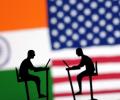
David Perdue said in a post on X that the US-India relationship delivers real results through close cooperation in diverse areas, including defence, energy and through Quad engagement.

A Pakistani delegation, led by Army Chief Field Marshal Asim Munir, has arrived in Tehran to mediate the ongoing conflict between the US and Iran, following initial talks in Islamabad.

There are enough people at the top decision-making level in Tehran who are still willing to negotiate, provided Trump can create the right setting for the negotiation to acquire a dynamic of its own, points out Ambassador M K Bhadrakumar.

India and Australia are all set to open negotiations on free trade following a feasibility study that showed each sides would gain AUD 30 billion over 20 years from lowering barriers.

Congress leader Jairam Ramesh raised the issue of the Indo-US trade deal soon after the zero hour ended and alleged that the information about the deal was being received from Washington instead.

Indian benchmark indices Sensex and Nifty surged over 1 per cent, with the Sensex jumping 918.60 points, driven by strong buying in banking and financial counters and a positive trend in global equities, fuelled by hopes of easing West Asia tensions.

Iran has denied agreeing to participate in a second round of peace talks, contradicting claims made by the United States. The denial comes as tensions remain high in West Asia, with a ceasefire window nearing its end.

Officials said the government-to-government engagement between the two countries on all other issues remains normal, but conceded rough spots over trade that need ironing out.

Indian benchmark indices Sensex and Nifty experienced declines due to a sharp rally in crude oil prices, continuous foreign fund outflows, and geopolitical uncertainties. Regulatory developments in the banking sector, particularly the implementation of the Expected Credit Loss (ECL) framework, also contributed to the selling pressure.

Pakistan is playing a key role in facilitating talks between the US and Iran, but the future of these negotiations remains uncertain. Despite ongoing diplomatic efforts, no dates have been set for a second round of discussions.

Two India-bound LPG tankers have crossed the Strait of Hormuz amid heightened tensions in the region, while an India-flagged vessel sank after being hit near the strategic shipping corridor.

Over the years, India-EU ties have grown, and covered trade, investment, climate change, science and technology, space, digital, mobility, and connectivity.

As the negotiations continued, the Iranian government said on social media that "talks between Iran and the US in Islamabad entered the expert-level stage as economic, military, legal, and nuclear committees joined in".

Indian stock markets extended their gains for a third consecutive day, with the Sensex climbing 753 points and the Nifty closing above 24,550, driven by a drop in crude oil prices and optimism surrounding potential peace talks between Iran and the US.

The US and Iranian delegations left Pakistan after failing to reach an agreement in historic talks aimed at resolving the West Asia conflict and stabilising global energy markets.

Both India and the EU are likely to announce a conclusion of trade talks on January 27.

Chinese Foreign Minister Wang Yi has urged Iran to guarantee freedom and safe passage through the Strait of Hormuz, a critical waterway for global oil trade, amid ongoing tensions with the US.

Trump criticised Iran for attempting to use international waterways for leverage, stating that the United States had restrained itself only to allow space for negotiations.

The ceasefire is still technically holding, to the extent that no overt hostilities have been reported yet, but the rhetoric has hardened dangerously. The week ahead will also clarify whether the Islamabad failure was a negotiating tactic or whether Washington has genuinely locked itself into a position from which the only exits are climb-down, escalation, or the slow bleed of a new status quo that nobody chose and nobody controls. Prem Panicker continues his must read blog on the Iran War.

A government official said India and the US are exploring an interim trade deal within 90 days.

China has called on Iran to reopen the Strait of Hormuz and expressed appreciation for Tehran's commitment not to develop nuclear weapons, a key demand of the US to end the conflict.

'Once the market decides it wants to go up, it goes up -- no amount of bad news can really hold it back.'

Indian stock markets are set to be influenced by ongoing developments in the US-Iran conflict, fluctuations in crude oil prices, and the latest quarterly earnings reports from major corporates, with foreign investor activity also playing a crucial role.
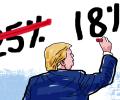
'Trump says India will buy over $500 billion of US goods.' 'At present, India's annual imports of goods and energy from the US are under $50 billion.' 'Reaching $500 billion would likely require more than 20 years, suggesting the figure refers to a long-term aspiration rather than a near-term commitment.'

Pakistan's Chief of Defence Forces Field Marshal Asim Munir held talks with Iranian leaders in Tehran to help resolve the conflict between the US and Iran, following a recent ceasefire agreement.

India and the European Union are set to announce on January 27 the conclusion of negotiations and finalisation of a free trade agreement, which is aimed at boosting economic ties between the two regions amid disruptions in global trade due to US tariffs, an official said.

Vijay's electoral triumph in Tamil Nadu is poised to dramatically revive the fortunes of his much-anticipated final film, Jana Nayagan, which has been plagued by release delays, censorship battles, and a cancelled streaming deal.

Direct talks between the US and Iran, mediated by Pakistan, have failed to produce an agreement after 21 hours of negotiations, with disagreements over Iran's nuclear ambitions and sanctions proving insurmountable.

The rupee recovered 55 paise from its all-time low level to close at 90.38 against the US dollar after a volatile trade on Wednesday, amid suspected aggressive central bank intervention.

The India-US trade deal has offered a much-needed breather for the Indian information technology (IT) industry, which has been grappling with global macroeconomic uncertainty and subdued client spending over the past few years.

'Nepal today is far more aware, self-confident, aspirational, and assertive.' 'India's policy so far has not been geared to this shift. It is time to redraw our Nepal strategy.'

Saudi Arabia and the UAE are actively pushing Trump to take the war to its bitter finish and 'erase' Iran's presence in the geopolitics of the region. Simply put, the two most powerful Sunni Arab oligarchies are on the same page as Israel. Such interference increases the risk of a breakdown in dialogue between the US and Iran, points out Ambassador M K Bhadrakumar.

Is the current rally telegraphing a durable peace plan in West Asia, boosted by United States (US) President Donald Trump's incoherent and contradictory posts on social media?
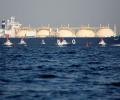
Iranian Deputy Foreign Minister Kazem Gharibabadi has urged India to take the lead in bringing peace to West Asia, highlighting the UAE's role in stalling BRICS consensus on the conflict. Gharibabadi also discussed a new framework with Oman for merchant vessels passing through the Strait of Hormuz.

Analysts predict that the ongoing conflict in West Asia, crude oil prices, and global trends will significantly influence the Indian stock market in the upcoming holiday-shortened week. Foreign investor activity and rupee movement will also be crucial.

Indian stock market indices Sensex and Nifty experienced a decline in early trade due to surging crude oil prices and ongoing geopolitical uncertainty in West Asia. Foreign fund outflows further contributed to the negative sentiment.

India has expressed strong concerns over attacks on commercial ships in the Strait of Hormuz, citing its importance to India's energy and economic security. Ambassador Yojna Patel highlighted the need to respect international law and ensure the safety of seafarers, while also addressing broader Middle East issues including the situation in Gaza and Lebanon.
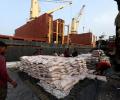
Indian exporters are unlikely to receive direct tariff refunds from the US's $166 billion payout, but the rollback of reciprocal duties is enhancing their pricing power and improving order prospects, particularly in textiles, apparel, and engineering goods.
